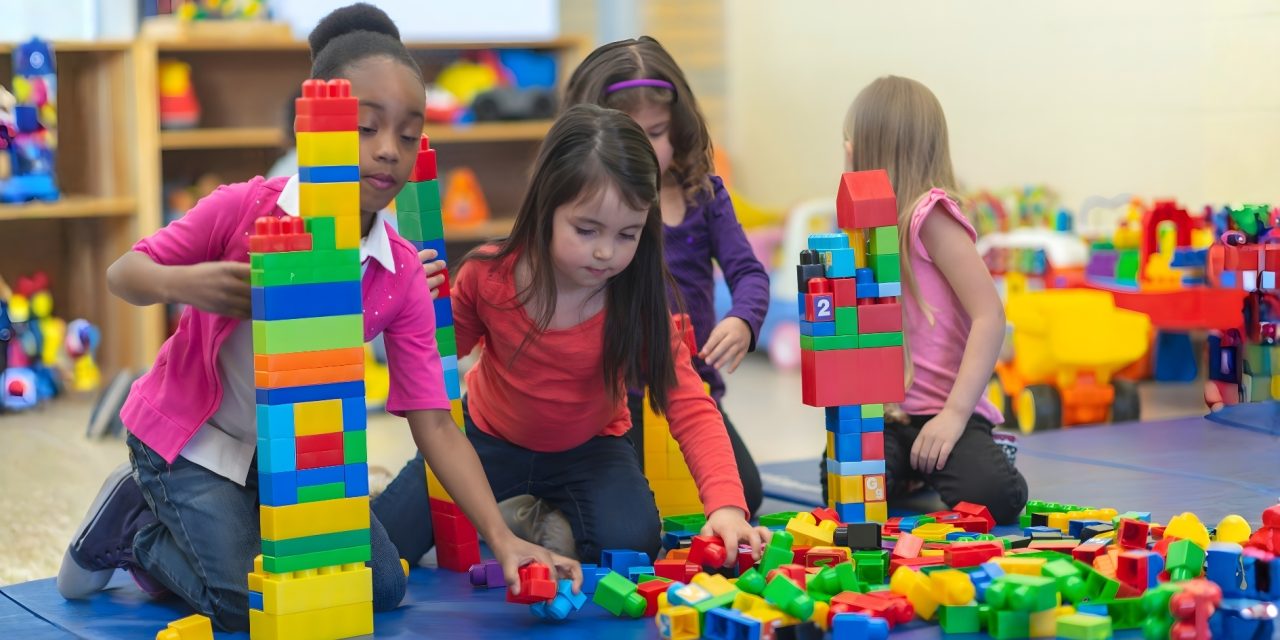
STEM learning doesn’t start with worksheets or perfect answers, it starts with curiosity. When children play, they experiment, test ideas, and make sense of the world without fear of getting it “wrong.” Research from Harvard’s Center on the Developing Child shows that play strengthens brain connections responsible for problem-solving, memory, and flexible thinking.
Psychologist Jean Piaget described learning as an active process, where children absorb new ideas and adjust them through experience. Play naturally supports this process. Instead of memorizing facts, kids explore concepts through trial, imagination, and discovery. The result is deeper understanding, better retention, and far less resistance to learning—especially in science, technology, engineering, and math.
Building Natural Curiosity Through Play
Curiosity peaks between ages three and seven, and unstructured play protects it better than formal instruction. Play invites children to ask questions, test theories, and explore outcomes without pressure or expectations.
Simple play-based triggers make STEM concepts come alive:
- Mystery boxes or jars encourage prediction using touch and sound
- “What if?” questions spark experiments like mixing colors or changing shapes
- Free exploration zones give kids time to tinker with safe household items
- Gradual challenges build confidence, like stacking blocks higher each round
In classroom and home settings alike, these playful prompts increase independent questioning and creative problem-solving. Whether it’s water play physics, sand experiments, or basic engineering builds, hands-on play turns curiosity into meaningful learning—without kids realizing they’re doing STEM.
Reducing Learning Anxiety With Play-Based STEM
Play also changes how children feel about learning. Instead of stress, play creates a safe space where mistakes become part of the fun. Educators consistently note lower anxiety levels in kids who learn math and science through play-based methods.
Three simple strategies make a big difference:
- Celebrate effort, even when things spill or collapse
- Pause and reset, giving kids time to breathe during tricky tasks
- Offer choices, letting children pick activities that match their interests
These approaches build intrinsic motivation and a growth mindset. Kids learn that challenges are something to explore, not avoid. For parents, this means fewer meltdowns, more cooperation, and children who approach STEM with confidence instead of fear.
Conclusion
STEM through play works because it respects how children naturally learn. It nurtures curiosity, lowers anxiety, and builds real problem-solving skills without pressure. Whether at home, in classrooms, or during family STEM time, playful learning lays the groundwork for lifelong confidence in science and discovery.
By focusing on exploration instead of perfection, parents and educators can turn everyday moments into meaningful STEM experiences, no special tools required.
What if learning didn’t have to come with pressure, tears, or “try harder”? Marvelus Kids focuses on playful approaches that help kids learn naturally while parents breathe a little easier.