Some kids can forget where they left their shoes but somehow remember every lyric from a song they heard three weeks ago.
If that sounds familiar, you may have an auditory learner on your hands. These children naturally absorb information through songs, sounds, rhythms, and spoken instructions. The right audio-based toys can turn that love of listening into opportunities for language growth, memory building, and creative play—all without adding more screen time.
Top Audio Toys for Auditory Learners
The best auditory toys combine entertainment with opportunities to listen, repeat, respond, and experiment with sound.
| Device | Price | Songs/Phrases | Languages | Age | Battery |
| VTech KidiBeats | $25 | 20 drums | 1 | 2+ | Battery |
| LeapFrog Learn Animals | $15 | 50 sounds | Eng/Span | 1+ | Battery-free |
| Melissa & Doug Piano | $30 | 30 songs | Eng | 3+ | Battery |
| Hape Xylophone | $20 | 8 notes | N/A | 2+ | Mallets |
| Battat Set | $35 | 6 instruments | Multi | 3+ | Battery |
Each of these toys encourages active listening while giving children opportunities to participate rather than simply consume sounds.
Music and Language Devices
Audio-based learning tools are especially effective when they combine sound with interaction.
For example, many LeapFrog products use spoken prompts, sound effects, and verbal feedback to encourage letter recognition, vocabulary growth, and listening comprehension. Children hear instructions and immediately respond, reinforcing learning through repetition.
This type of play feels more like a game than a lesson, which often leads to longer engagement and stronger retention.
Bilingual toys add another layer of learning by exposing children to multiple languages through songs, sounds, and simple phrases. Hearing words repeatedly in different contexts helps build familiarity naturally during play.
Musical Toys That Encourage Exploration
Not every learning toy needs to talk.
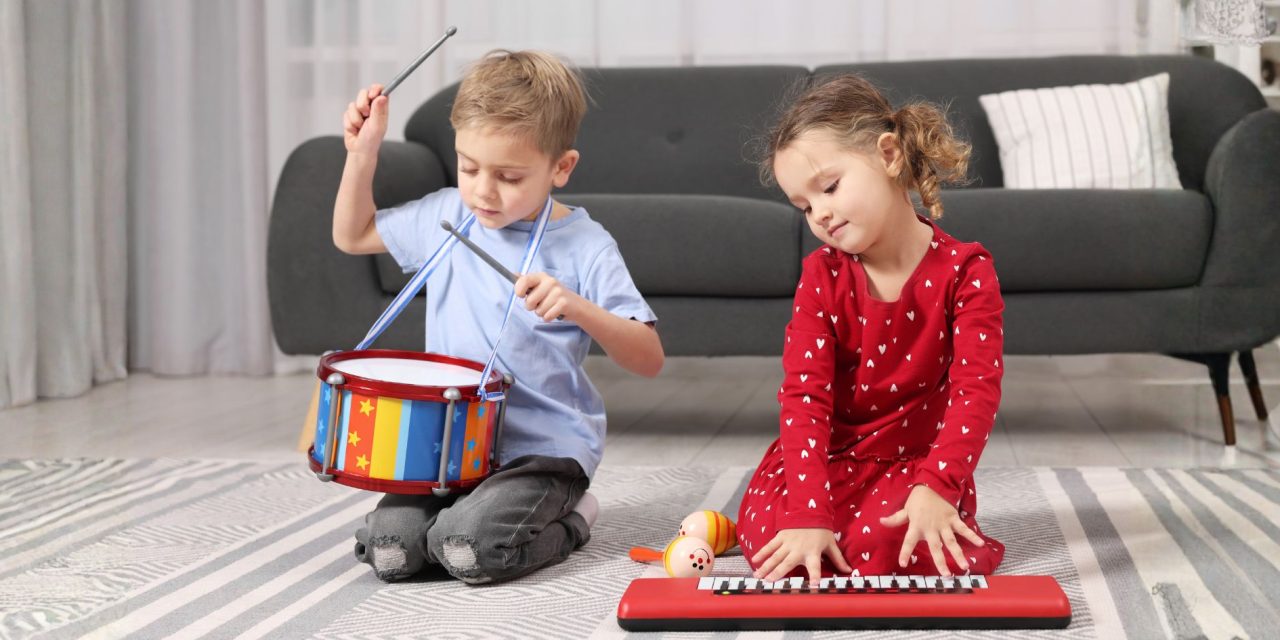
Simple instruments like toy pianos, drums, xylophones, and percussion sets allow children to experiment with rhythm, pitch, and sound patterns on their own.
Musical exploration helps children develop listening skills while building confidence. There is no “wrong” way to play a xylophone or tap a drum pattern. Kids learn by trying, adjusting, and discovering new sounds.
This freedom to experiment often keeps auditory learners engaged far longer than activities with fixed outcomes.
Conclusion
Auditory learners often absorb information through sound, rhythm, music, and spoken language. The right toys give them opportunities to strengthen those skills while having fun.
Whether it’s a musical instrument, a language-learning device, or a toy filled with songs and sounds, audio-based play can support communication, memory, creativity, and confidence all at once.
Which song, rhyme, or funny phrase has your child repeated so many times that the whole family now knows it by heart?
Those little moments of listening, singing, and learning often begin with the right play experiences. Discover more creative learning ideas and educational toys only at Marvelus Kids!