Let’s be honest—most toy systems don’t fail because they’re complicated. They fail because life gets busy, routines slip, and suddenly the playroom looks like a toy store exploded again.
A toy rotation system only works if it keeps working. The real win is not the setup—it’s the consistency. When maintained properly, it keeps playtime engaging, reduces clutter, and quietly teaches kids to value what they already have.
Maintaining the System Long-Term
The difference between a short-term fix and a lasting system comes down to rhythm. Families who succeed with toy rotation treat it less like a one-time project and more like a light, repeatable habit.
A simple schedule does most of the heavy lifting. Regular check-ins prevent toys from slowly piling back into the space, while keeping playtime fresh and intentional. Instead of constant overwhelm, you get a steady cycle of rediscovery.
Quarterly audits are especially effective. Without them, “bin creep” sets in—where toys gradually sneak back into circulation until everything feels crowded again. Setting calendar reminders makes this automatic rather than reactive.
Tracking also helps more than people expect. A basic log—nothing fancy—can reveal which toys actually hold attention and which ones just take up space. Over time, this shapes smarter rotation decisions and keeps the system aligned with your child’s interests.
Involving kids turns maintenance into a shared habit instead of a chore. When they help choose what stays, rotates, or leaves, they build ownership over their space. That alone reduces resistance and increases engagement during playtime.
Most importantly, the system should evolve. As children grow, their interests shift, and the rotation should reflect that. Swapping in age-appropriate toys keeps things exciting while reinforcing the idea that quality matters more than quantity.
Seasonal Toy Audits and Updates
A consistent audit rhythm keeps everything grounded. Think of it as a reset button that brings the system back to its original purpose.
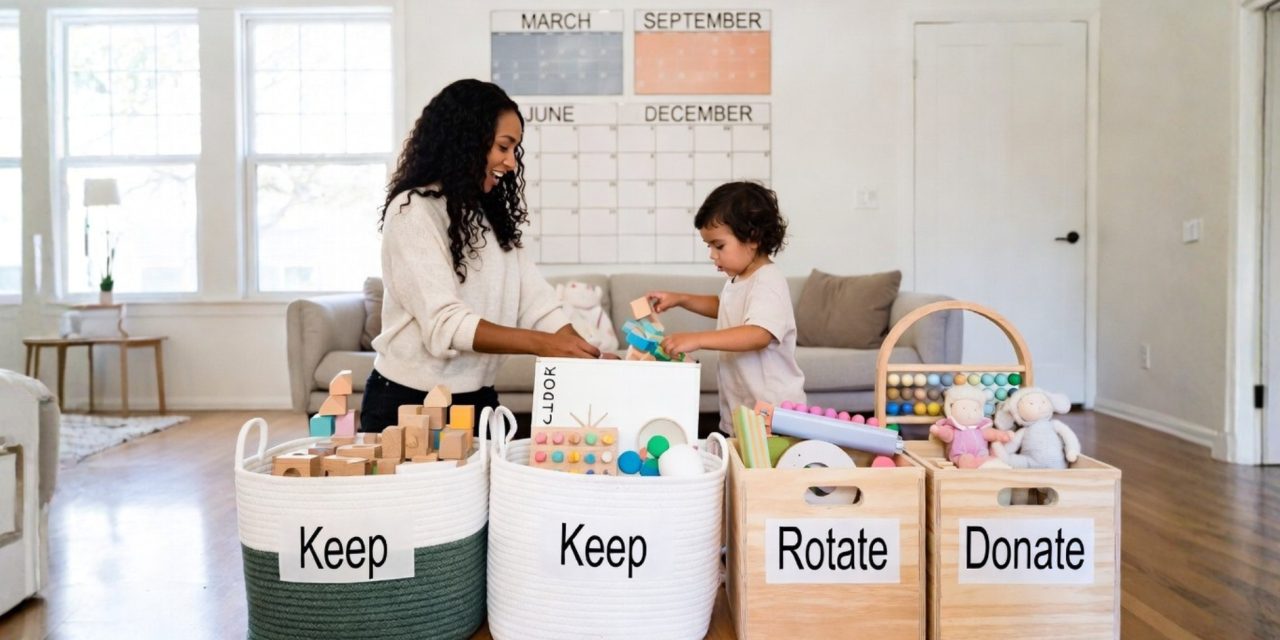
Mark four simple checkpoints across the year—March, June, September, and December. Each session only needs about 45 minutes, but it makes a noticeable difference. Using the same checklist each time keeps decisions quick and consistent.
During these audits, sort toys into three clear groups: keep, rotate, and donate. This structure avoids overthinking and keeps momentum going.
Spring tends to be about growth. As kids develop new skills, it makes sense to introduce toys that challenge them—larger building sets, more complex puzzles, or movement-based play. At the same time, older or outgrown items can quietly exit the rotation.
Summer shifts naturally toward outdoor and sensory play. Cars, water toys, and activity-based items take priority, while heavier indoor toys step back. The goal is to match the energy of the season.
Fall leans into focus. Educational toys, creative tools, and hands-on activities fit well here, supporting learning while keeping things fun. Then winter brings everything back inward—cozier, slower-paced toys like puzzles, dolls, and imaginative play sets.
A few simple filters make decisions easier during each audit:
- If a toy is rarely used, it probably does not need to stay.
- If there are duplicates, one is enough.
- If it is broken or ignored, it is time to let it go.
One small but powerful rule is the “gift quarantine.” New toys do not go straight into play. Let them sit in rotation storage for about two weeks. This prevents overload and keeps the system balanced even during birthdays or holidays.
Over time, these small, consistent updates turn toy rotation into something that runs almost on autopilot. The space stays organized, play stays meaningful, and the system quietly supports both creativity and calm.
Conclusion
A toy rotation system is not about strict rules or perfect organization. It is about creating a flow that keeps play fresh without constant effort.
With simple routines, seasonal check-ins, and a willingness to adapt, the system becomes less of a task and more of a rhythm. And when that happens, both the space and the experience of play start to feel lighter.
What part of maintaining a toy system feels hardest: the consistency or deciding what to keep?
Let us know in the comments, and keep building smarter, calmer play spaces only at Marvelus Kids!