Most kids can detect the sound of a snack wrapper opening from three rooms away. Conveniently, many of those same kitchen ingredients can also become the stars of exciting science experiments.
With a few pantry staples, children can create fizzing eruptions, glowing slime, colorful reactions, and foamy surprises right at home. These hands-on STEM activities make learning feel like play while encouraging curiosity, problem-solving, and scientific thinking.
When Chemistry Starts to Fizz
Few science experiments are as satisfying as watching a reaction bubble, foam, or erupt before your eyes. Better yet, these activities require only simple ingredients that many families already have in the kitchen.
Baking Soda Volcanoes
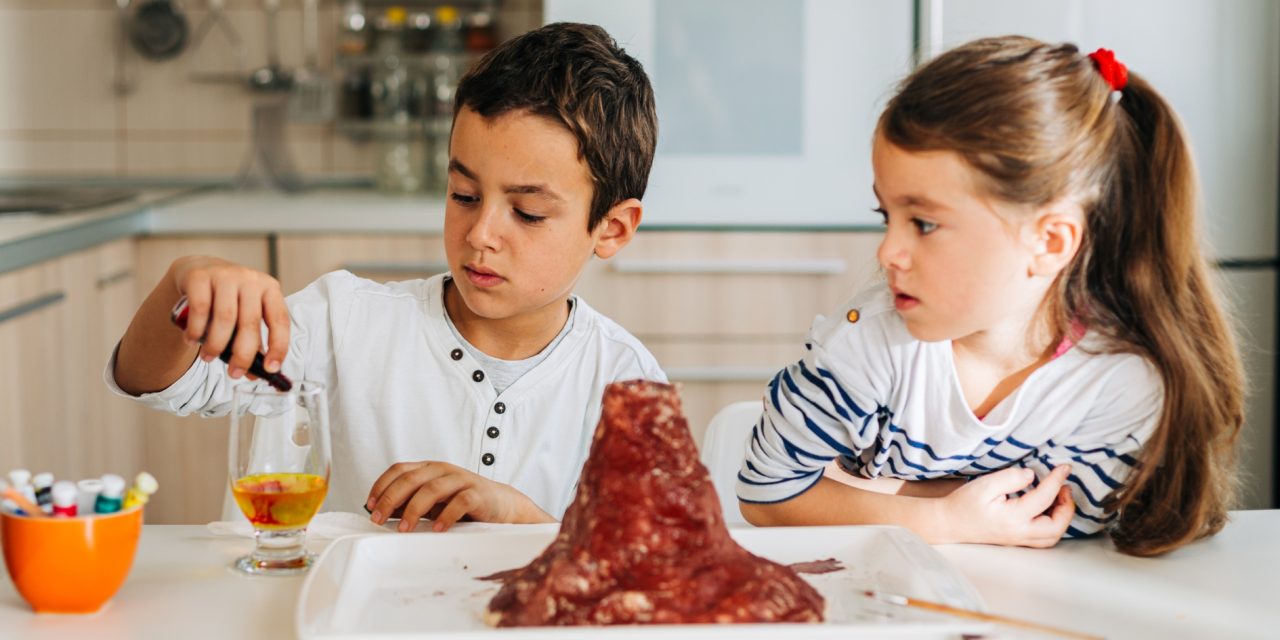
The classic baking soda volcano remains a favorite for good reason. Children can mold dough around a small cup to create a volcano shape, then add baking soda and a few drops of red food coloring.
When vinegar is poured into the center, an exciting eruption begins almost instantly. The reaction releases carbon dioxide gas, creating the bubbling lava effect that never seems to get old.
For bigger eruptions, try using a larger bottle outdoors. Just expect a lot more excitement—and a little more cleanup.
Elephant Toothpaste
If your child enjoys dramatic science demonstrations, Elephant Toothpaste is hard to beat. By combining yeast, dish soap, and low-concentration hydrogen peroxide, you can create a towering stream of foam.
The reaction happens when oxygen is rapidly released, producing a surprisingly large amount of bubbly foam. Adding food coloring can make the display even more impressive, especially during group STEM activities.
Adult supervision is important for this experiment, but the cleanup is quick and simple.
Stretchy Science Kids Can Touch
Some experiments are exciting because they explode. Others are memorable because children can poke, stretch, squish, and play with the results long after the experiment ends.
Glow Slime Creations
Glow slime combines chemistry, sensory play, and creativity in one engaging activity. Mixing clear glue with tonic water and an activator creates a stretchy slime that glows under a blacklight.
Children love experimenting with textures while learning that chemistry is not always about dramatic reactions. Sometimes it is about creating entirely new materials.
Adding glitter transforms the activity into a STEAM project by blending science and art into one colorful experience.
The Science Behind the Slime
Making slime introduces children to polymer chemistry in a simple and accessible way. The ingredients link together to form stretchy chains, creating the unique texture kids enjoy.
As children mix ingredients and observe changes, they begin developing critical thinking skills. Asking questions such as “What happens if we add more?” encourages inquiry-based learning and scientific exploration.
Colorful Reactions That Inspire Curiosity
Not every chemistry experiment needs fizz or foam to capture a child’s attention. Sometimes the most fascinating reactions are the ones that create unexpected movement and color.
Color-Changing Milk
This simple experiment uses milk, food coloring, and dish soap to create swirling patterns that seem almost magical.
After adding drops of food coloring to the milk, touch the surface with a soap-dipped finger or cotton swab. The colors immediately begin dancing across the dish, creating beautiful moving designs.
The reaction occurs because the soap interacts with the fats in the milk, disrupting the liquid’s surface tension.
Learning Through Observation
Color-changing milk is a great reminder that science is not only about big reactions. It is also about noticing patterns, asking questions, and exploring how materials behave.
Experiments like this encourage children to slow down, observe carefully, and think about why changes occur. These habits help build the foundation for future STEM learning.
Conclusion
Kitchen chemistry proves that some of the best science lessons come from the simplest ingredients. Baking soda, vinegar, glue, milk, and food coloring can become powerful tools for discovery when paired with curiosity and creativity.
Whether children are creating volcanoes, stretching glowing slime, or watching colors swirl across a dish, these activities make STEM learning exciting and accessible. Best of all, they show that science is not confined to classrooms or laboratories—it can happen right in the heart of your home.
Which kitchen chemistry experiment do you think would earn the biggest “Whoa, do that again!” reaction from your child?Tell us which science activity you’re trying first, and keep exploring more hands-on STEM adventures with Marvelus Kids!