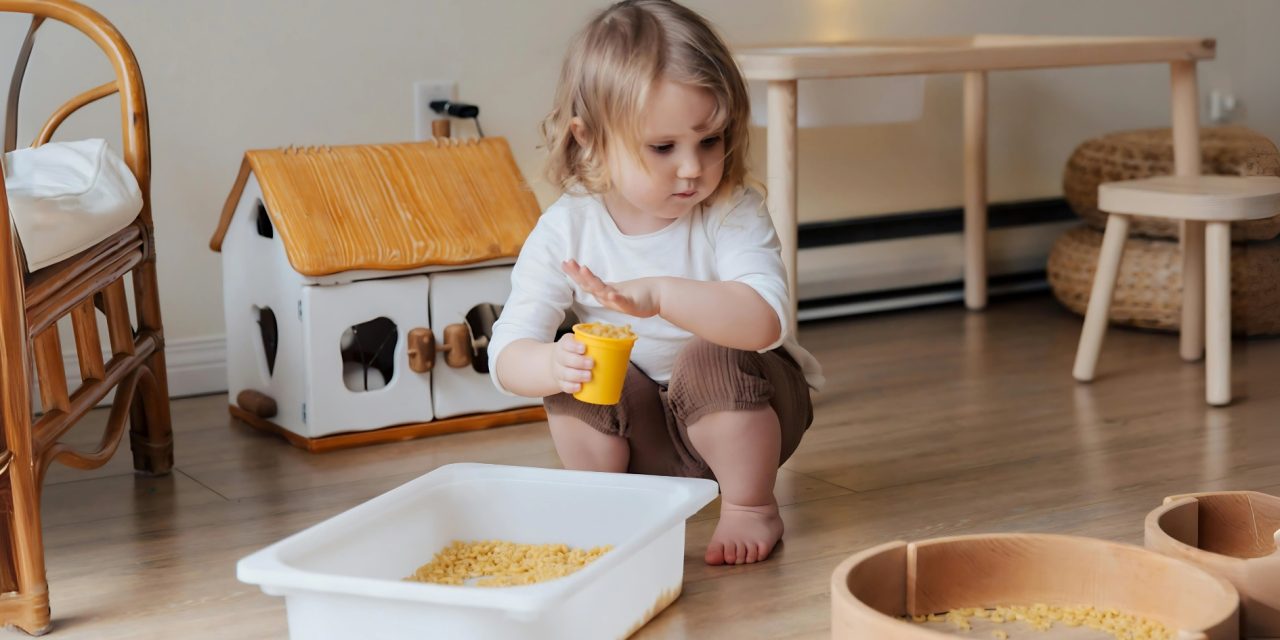
Sensory play is more than just messy fun — it’s a powerful tool for learning and development. At home, parents have the unique opportunity to create an environment that sparks curiosity, builds skills, and nurtures creativity through engaging sensory experiences.
With just a little planning and imagination, everyday items can be transformed into activities that help children explore textures, colors, sounds, and movement while also strengthening their motor and problem-solving abilities.
Create Simple and Affordable Sensory Bins
Sensory bins are one of the easiest ways to start incorporating sensory play at home. Fill a container with safe materials like rice, beans, pasta, or sand and let your child sift, scoop, and pour. You can add measuring cups, spoons, or small toys to make the activity more interactive.
To keep things exciting, change the theme of the bin — for example, a “beach bin” with seashells and blue-dyed rice or a “garden bin” with faux flowers and toy insects. These simple setups encourage fine motor skill development while also inspiring imaginative play.
Incorporate Creative and Tactile Art Projects
Arts and crafts can be an incredible outlet for sensory exploration. Activities like finger painting with edible homemade paint, sculpting with playdough, or stamping patterns with natural materials allow children to explore texture, color, and form.
Encourage them to mix colors, layer textures, and experiment freely — this fosters both sensory awareness and creative problem-solving. Keeping the project child-led helps them build confidence and independence while enjoying the process as much as the final product.
Design Safe Indoor and Outdoor Obstacle Courses
Physical movement is just as important in sensory play as touch or sight. Create a DIY obstacle course using soft pillows, cardboard tunnels, pool noodles, or blankets. For outdoor versions, you can use cones, hoops, and stepping stones.
These activities challenge balance, coordination, and spatial awareness, all while giving children a healthy way to burn off energy. Adding challenges like “walk backward on the line” or “crawl under the blanket” keeps it exciting and unpredictable.
Mix in Everyday Sensory Moments
Not every sensory experience needs to be a planned activity. Everyday routines — like helping in the kitchen, playing with water during bath time, or walking barefoot in the grass — can all be turned into learning opportunities.
Invite your child to describe what they feel, hear, or smell. The more senses you engage, the deeper the learning connection becomes.
Conclusion
Encouraging sensory play at home doesn’t require expensive tools or complicated setups. It’s about offering children opportunities to explore, create, and experiment in ways that stimulate their senses.
From simple sensory bins and art projects to adventurous obstacle courses and everyday sensory moments, these activities strengthen skills, spark curiosity, and create joyful bonding experiences. With a little creativity, your home can become a space where learning and play naturally go hand in hand.
Start with one simple sensory activity this week, and see where your child’s imagination takes you. Small, consistent efforts can have a big impact on their development. For more inspiration, visit Marvelus Kids to explore fresh ideas and resources for hands-on learning.