Nature has a way of making learning feel less like a lesson and more like an adventure. One minute it’s “just playing outside,” the next it’s full-on science in motion—ants marching, leaves changing, weather shifting.
That is exactly why nature-based STEM works so well. It blends curiosity, movement, and real-world discovery into something kids actually enjoy, not just tolerate, all while being refreshingly affordable for everyday families.
Nature-Based STEM Adventures
Outdoor STEM learning has been shown to improve science understanding compared to indoor-only approaches, according to studies by the Lawrence Berkeley National Laboratory. Nature provides real, unpredictable environments where biology and earth science come alive.
Research from the Cornell Lab of Ornithology also highlights how outdoor, hands-on activities boost engagement. Kids are not just observing—they are touching, moving, and interacting with the world around them.
Simple activities like leaf hunts or rock collections quickly turn into problem-solving exercises. Instead of memorizing facts, kids begin asking questions naturally. Why are some leaves bigger? Why do certain rocks feel smoother?
These small moments build curiosity without pressure. Over time, they support cognitive development, creativity, and confidence in exploring new ideas. Families often find these activities double as bonding time, making learning feel shared rather than assigned.
Backyard Observation Labs
Turning your backyard into a mini science lab does not require fancy tools—just consistency and curiosity. One of the simplest ways to start is by observing a single ant hill over a week.
Day one begins with mapping. Use string or chalk to outline the area and create a simple grid. This helps kids visualize space and understand where activity happens.
By day two, observation becomes more detailed. Kids can track how many ants pass certain points using tally marks. Patterns start to emerge, and suddenly, it feels like real research.
Day three introduces experimentation. Place small amounts of sugar and protein nearby, then observe which one attracts more ants. This introduces basic hypothesis testing without making it feel complicated.
As the week continues, the learning deepens. Temperature changes, nighttime behavior, and movement patterns all reveal how environment affects living things. By the final days, kids can graph their findings and explain what they discovered.
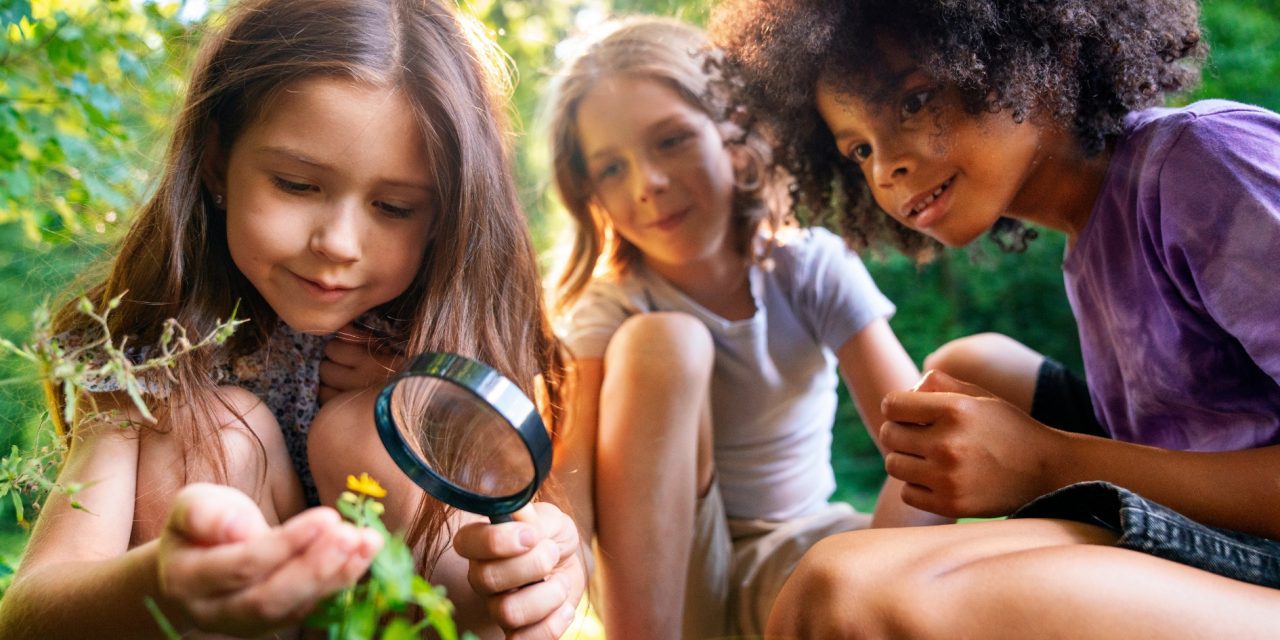
A few simple tools make this easier: a notebook, a magnifying glass, and a timer. That is enough to transform casual observation into structured exploration.
To expand the experience:
- Build a simple bird feeder and track feeding patterns
- Collect soil samples to compare texture and moisture
- Add daily weather logs to connect environmental changes
These small extensions keep the experience fresh while reinforcing the same core idea—learning by doing.
Wrap Up
Nature-based STEM works because it does not feel forced. It meets kids where they already are—curious, active, and ready to explore.
By turning everyday outdoor moments into simple investigations, learning becomes something they participate in, not something they are told to do. Over time, that shift makes a lasting difference.
What kind of outdoor discovery would your kids enjoy most—observing tiny ecosystems or tracking changes over time?
Let us know in the comments, and keep exploring fun, meaningful learning ideas only at Marvelus Kids!