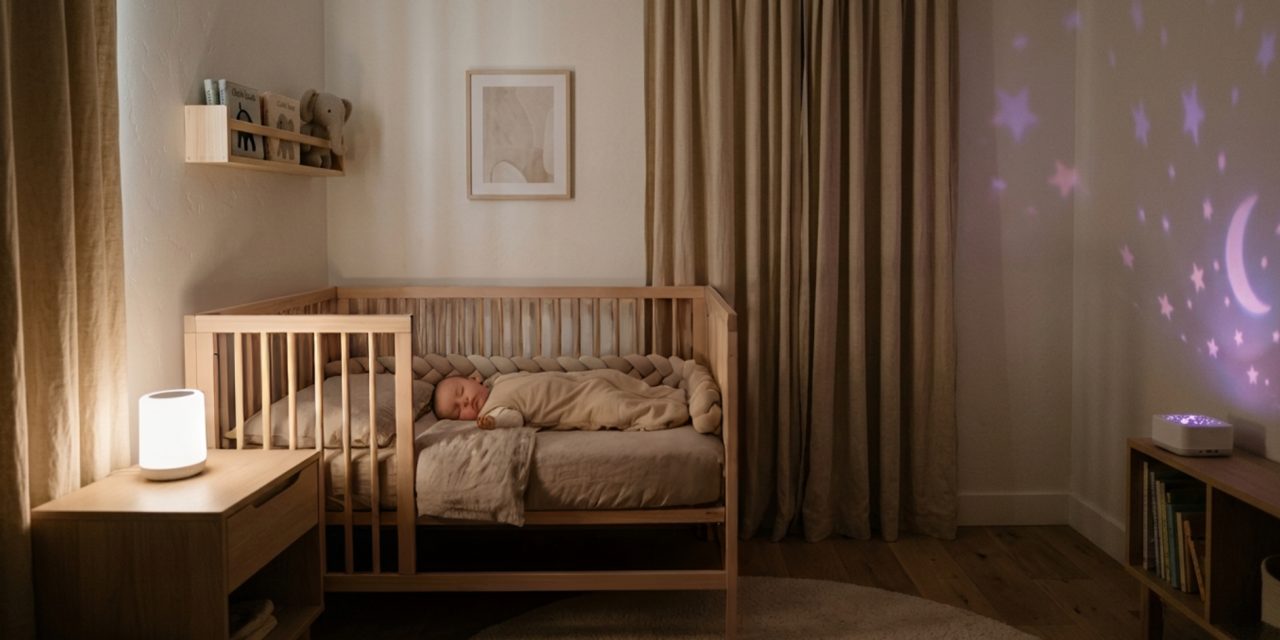
If you already have a bedtime routine in place but nights still feel unpredictable, the missing piece may be the environment. A consistent sleep setup—built with the right sound and lighting tools—can significantly reduce bedtime resistance and night wakings.
Research shows that continuous white noise can extend sleep duration by masking household disruptions, while low, warm lighting supports natural melatonin production. The key is not adding random gadgets, but intentionally selecting tools that work together to create a calm, womb-like atmosphere.
This guide focuses specifically on the core sound machines and night lights that help structure a reliable, tear-free sleep environment for babies, toddlers, and preschoolers.
Core Sleep Tools at a Glance
These four tools are commonly used by parents to stabilize bedtime routines and reduce night disruptions. Each supports sleep differently, whether through continuous sound masking or portable soothing options for naps on the go.
White Noise Machines
White noise helps block sudden environmental sounds that trigger wake-ups. Consistency is critical—sound should run continuously through the night at a steady volume.
Popular options include:
- Hatch Rest+ ($69.99) – Combines app-controlled white noise and customizable night light. Suitable from newborn through preschool years.
- Marpac Dohm ($45) – Uses real fan-based sound for a natural tone.
- LectroFan ($52) – Offers multiple sound frequencies and fan variations.
- SoundBub ($22) – Compact and clip-on, ideal for strollers and travel.
| Machine | Price | Key Feature | Best For |
| Hatch Rest+ | $70 | App Control | 0–5 years |
| Marpac Dohm | $45 | Fan-Based | 6mo+ |
| LectroFan | $50 | 10 Sounds | 3mo+ |
| SoundBub | $40 | Portable | Newborns |
Set volume around 50 dB (similar to a soft shower). Ocean waves often soothe younger babies, while steady white noise works well for toddlers. Parents frequently report fewer night wakings once sound remains consistent all night.
Night Lights and Projections
Lighting matters just as much as sound. Bright or blue-toned lights can suppress melatonin, making it harder for children to settle. Soft red light or gentle projections can ease anxiety without overstimulating the brain.
Top options include:
- BlissLights Sky Lite ($45) – Projects calming galaxy visuals.
- Hatch Rest+ (combo light and sound option) – Adjustable brightness levels.
- Aurora Star Projector ($35) – Simple star display for toddlers.
- Luminary Moon Light ($25) – Soft glow ideal for infants.
| Light | Price | Projection | Best Age |
| BlissLights | $45 | Galaxies | 2–8 years |
| Hatch | $70 | Combo | 0–5 years |
| Aurora | $35 | Stars | 1–6 years |
| Luminary | $25 | Moon | 3mo+ |
For best results:
- Use dim red light around 620nm wavelength.
- Place a projector or light at least six feet from the bed.
- Avoid switching colors during the night.
When paired with books and consistent timing, these tools can reduce bedtime resistance and help children settle faster during regressions or separation anxiety phases.
Conclusion
Creating a reliable sleep environment requires more than a routine; it requires consistency in sensory cues. White noise machines help mask disruptive sounds and provide continuous auditory comfort, while dim, warm-toned lighting supports natural sleep hormones and reduces nighttime anxiety.
When chosen intentionally and used consistently, these tools can significantly reduce night wakings and bedtime struggles across infancy and early childhood. Instead of experimenting with multiple disconnected gadgets, focusing on sound stability and appropriate lighting creates a structured sleep setup that supports longer, more restful nights for both children and parents.
Is your child’s bedtime setup truly designed for better sleep?Let us know what’s working in your home — and follow Marvelus Kids for more parent-tested tools that make bedtime calmer and more predictable.