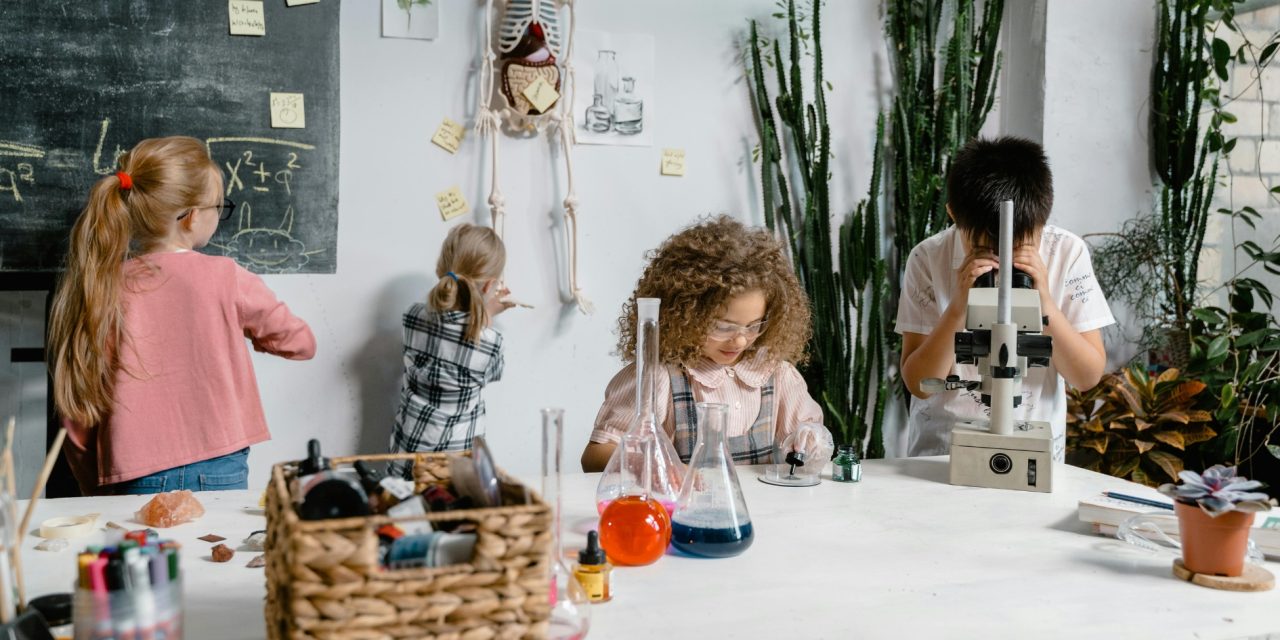
Kids have a knack for asking questions that make adults sweat—like “Why is the sky blue?” or “What if gravity stops?” Instead of fumbling for complicated answers, why not hand them a science kit?
These hands-on tools turn curiosity into experiments, letting children learn while having fun. From bubbling reactions to mini biology labs, science kits bring abstract concepts to life. They also nurture problem-solving, creativity, and teamwork—skills your child will carry far beyond the classroom.
Importance of Hands-On Learning
Research shows that hands-on learning boosts retention rates by up to 75%, making it one of the most effective ways to teach STEM concepts. Science kits allow children to actively test ideas instead of just reading about them.
For example, the Interactive Science Learning Kit introduces experiments that demonstrate chemical reactions in real time, helping kids see principles in action. Simulations are also powerful tools. Programs like PhET let learners change variables and immediately watch the results. This helps increase engagement by up to 50%. The interactive approach strengthens both comprehension and enthusiasm for science.
Benefits of Science Kits for Kids
Science kits provide a safe and exciting space for experimentation while enhancing critical thinking and collaboration. The National Geographic STEM kits are a great example. Their “Magic Chemistry” set allows kids to create experiments at home, sparking curiosity and confidence. These projects also encourage teamwork, since many kits are designed for group activities.
Keeping a science journal to record findings deepens understanding by reinforcing the scientific method. Beyond academics, the experience builds resilience—children learn that failure is simply part of discovery, not the end of it.
Conclusion
Science kits transform learning from memorizing facts into an adventure filled with curiosity, exploration, and discovery. They encourage children to experiment boldly, problem-solve creatively, and work together while building essential skills.
With the right kit, science becomes less about textbooks and more about making sparks fly—literally and figuratively. Parents and educators alike will find these tools invaluable for keeping young minds active and inspired.
The adventure doesn’t stop here. At Marvelus Kids, we’ll soon explore the different types of science kits, from chemistry to biology and beyond. Which kind of kit do you think would spark your child’s curiosity the most?